
How Can You Tell if Your Dentures No Longer Fit Properly?
November 14, 2026 9:00 amDentures can lose their fit gradually enough that you adapt before realizing how much has changed. You may add more adhesive, cut meat into smaller pieces, or avoid a food you used to eat comfortably. If those workarounds have become part of most meals, it is time to have the denture and the tissues beneath it checked.
At Magnolia Family Dental in Alvin, Texas, Dr. Angela Marteeny can assess full and partial dentures along with the gums and any remaining teeth. We look for movement, pressure spots, wear, and changes in the supporting structures. Depending on what we find, an adjustment, reline, repair, or replacement may be considered rather than asking you to keep working around the fit.
Movement During Meals
A denture that lifts, rocks, or slides when you chew may no longer match the ridge beneath it closely. You might start chewing only on one side or avoiding firmer food to keep it steady. Changes in the way the teeth meet can also cause the denture to tip under pressure.
If your dentures are new, you may need a little practice using them and a follow-up adjustment. But if a denture you have worn comfortably for years has started rocking at meals, let us check the fit. With a partial, Dr. Marteeny will also look at the remaining teeth and the clasps that help hold it in place.
Recurring Sore Spots
An area that rubs in the same place can leave the gum tender or develop a sore. You may remove the denture earlier in the evening or keep shifting it with your tongue to avoid the pressure. A rough edge or uneven fit can contribute, although irritation can also have other causes.
If a sore spot keeps returning or becomes more painful, contact us for an adjustment and a check of the gum. A small change to the denture may relieve the pressure once we find where it rubs. A sore that does not heal also needs an exam, even when it seems to be caused by the denture.
Using More Adhesive
Adhesive can help some denture wearers when used as directed, but a steadily increasing amount can signal a fit problem. You may find yourself reapplying it during the day or worrying that the denture will loosen before dinner. Adding another layer will not correct a base that no longer matches the gums.
Bring your adhesive along and explain how often you have to reapply it. Dr. Marteeny can check the denture while you point out where it lifts or feels loose. We can also review the product directions so you are not using more than recommended while waiting for the fit to be corrected.
Food Under Your Denture
Food can slip beneath a denture, but a new pattern of trapping may reflect changes in the fit. You might need to remove it after every snack or find the same area rubbing after meals. A partial denture may also trap food beside a remaining tooth that needs examination.
Keep cleaning both the appliance and your mouth carefully while you arrange a visit. For partial dentures, the natural teeth and gums still need daily plaque removal and fluoride toothpaste. We can show you how to clean around the attachments without bending them or missing the tooth surfaces beneath them.
Changes in Speech or Your Bite
A denture that clicks more often or shifts while you speak may be moving differently from before. Worn replacement teeth or changes in the bite can also affect how the upper and lower dentures meet. You may notice that your mouth closes farther or that food no longer breaks down as easily.
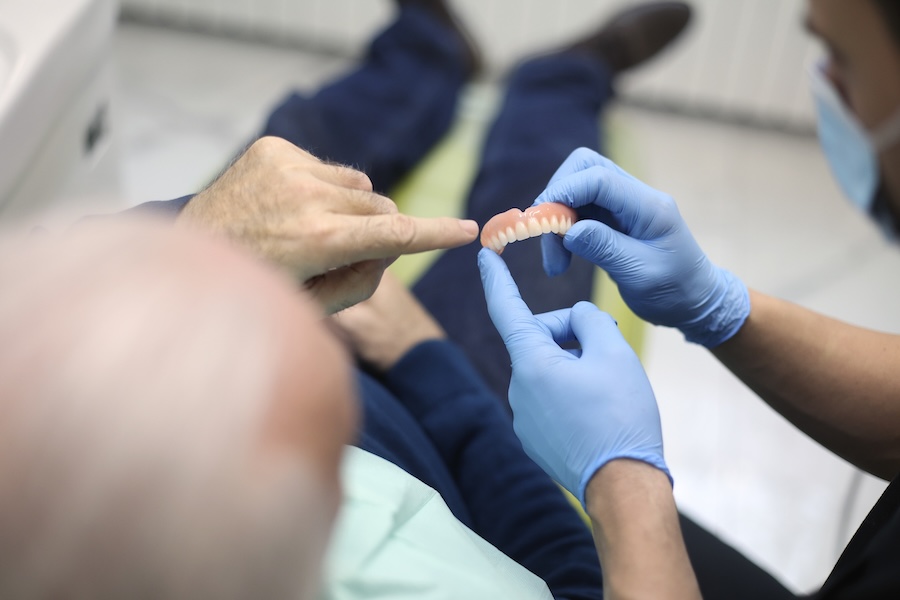
At the visit, show us what happens when you close your teeth together or start talking. We can check whether the problem is the fit against your gums, worn denture teeth, or the way the upper and lower teeth meet. A reline can help some fit problems, but worn teeth or a changed bite may need a different approach.
Changes in Your Gums and Bone
After teeth are lost, the supporting bone and gums continue changing over time. A denture made to fit those tissues several years ago may therefore loosen even when the appliance has not broken. More rapid changes can occur during healing after extractions, including with an immediate denture.
A reline can improve how an existing denture meets the gums, while smaller pressure areas may need adjustment. At Magnolia Family Dental, we also offer implant-supported denture options, which may be worth discussing if stability remains a concern after the fit is assessed. Dr. Marteeny can check the bone, gums, and your health before explaining whether that approach or a change to your current denture makes more sense.
Denture Repairs and Checkups
Household glue, hot water, and attempts to bend clasps can damage the denture or injure your mouth. If it breaks, save the pieces and contact our office before wearing it again. We can explain the next step and whether a repair is possible after checking the appliance.
Even if you have no natural teeth, regular dental visits allow us to examine the gums, tongue, and other oral tissues. We can also review daily cleaning and how to store the denture when it is out. Bring it with you so we can assess the fit while discussing what you notice during meals.
Denture Care in Alvin, Texas
If your dentures have started slipping, rubbing, or changing what you eat, schedule a visit with Dr. Angela Marteeny. We can check the fit and explain whether an adjustment, reline, or another approach makes sense. Contact Magnolia Family Dental in Alvin, Texas, and let us help you enjoy meals without spending so much time managing your denture!
Categorised in: Dentures