
How Common Is a Loose Dental Implant?
May 23, 2026 9:00 amDental implants are one of those things people usually stop thinking about once they are healed. You brush, chew, floss around them, and go about your day. So when something near an implant starts to click, shift, or feel not quite right, it can be hard to tell whether the implant itself is loose or whether the crown on top needs attention.
A truly loose dental implant post is not common after it has healed into the jawbone. More often, the movement comes from another part of the implant restoration, such as the crown, abutment, or small connecting screw. The treatment depends on which part is moving, so the first step is figuring out whether the crown, connector, or implant post is involved.
At Magnolia Family Dental in Alvin, TX, Dr. Angela Marteeny can examine the implant, check the surrounding gums and bone, and figure out where the movement is coming from. If your implant feels loose, clicks when you chew, or suddenly feels different, it is worth having it checked before the area becomes sore or harder to treat.
What Does It Mean When a Dental Implant Feels Loose?
When someone says their dental implant feels loose, they may be talking about several different things. A dental implant restoration has more than one part, and the part that feels loose is not always the implant post itself.
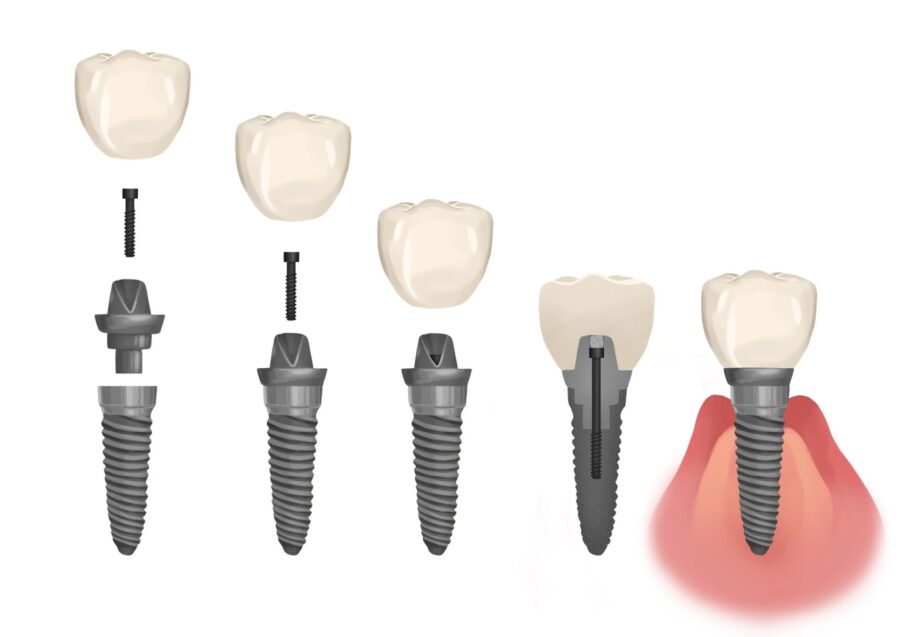
The implant post is the part placed in the jawbone. This acts like the replacement tooth root. Above that is the abutment, which connects the implant post to the visible tooth replacement. The crown is the part that looks like a tooth and helps you chew.
If the crown is moving, the implant post may still be solid in the bone. If the abutment screw has loosened, the crown may wiggle or click even though the implant underneath is stable. If the implant post itself is moving, that is more serious and should be evaluated quickly.
It is difficult to sort this out at home because the movement can feel similar. Dr. Marteeny can gently test the restoration, check the bite, take X-rays if needed, and determine whether the issue involves the crown, abutment, gum tissue, bone, or implant post.
Is a Loose Dental Implant Common?
A loose dental implant post is not common once the implant has fully healed and bonded with the jawbone. Dental implants are placed with the goal of becoming stable through osseointegration, which is the process where bone grows closely around the implant surface.
When that healing process goes well, the implant should feel firm. It should not move when you chew, brush, floss, or touch it with your tongue. Movement of the implant post may mean the implant did not fully integrate or that bone support around it has changed over time.
It is more common for the restoration on top of the implant to feel loose. A crown, abutment, or screw can loosen from chewing forces, clenching, grinding, or normal wear. That still needs attention, but it is often a different kind of problem than a loose implant post.
So, the short answer is this: a loose implant crown or screw can happen, but a loose implant post is not something to wait on. Any movement around an implant should be checked.
Why the Crown May Feel Loose
The crown is the visible part of the implant restoration. It is the part that looks like a tooth and meets the opposing tooth when you bite. In some cases, the crown may loosen while the implant post underneath remains stable.
This can happen if the cement holding the crown weakens, if a screw-retained crown loosens, or if heavy chewing pressure has stressed the restoration over time. You may notice clicking, shifting, food catching, tenderness, or a feeling that the tooth no longer sits quite right.
A loose crown is usually less serious than a loose implant post, but it still needs to be repaired. If the crown continues moving, it can irritate the gums, damage the abutment, affect your bite, or allow bacteria and food debris to collect around the restoration.
Dr. Marteeny can check whether the crown can be tightened, re-cemented, adjusted, or replaced. The sooner it is evaluated, the better the chances of keeping a small issue from turning into a bigger repair.
Why the Abutment or Screw May Loosen
The abutment is the connector between the implant post and the crown. In many implant restorations, a small screw holds parts of the system together. If that screw loosens, the crown may feel unstable even though the implant post is still secure in the bone.
This can happen from regular chewing over time, clenching or grinding, an uneven bite, or wear on the implant components. Some patients feel a slight wiggle. Others notice a clicking sensation, tenderness, or a change in the way the implant crown contacts the teeth around it.
A loose abutment or screw should be repaired before more parts are stressed. Continued movement can damage the crown, abutment, screw, or implant components. It can also make the gum tissue around the restoration sore.
The repair may involve accessing the screw, tightening or replacing components, and checking the bite so the implant is not taking too much pressure. Dr. Marteeny can determine the right repair after examining the restoration.
When the Implant Post Itself Is Loose
If the implant post is moving, the situation needs prompt attention. The post is supposed to be fixed in the jawbone. When it wiggles, it may mean the implant did not bond with the bone properly, or it may mean the bone around the implant has been lost.
This can happen early in the healing process or years after the implant was placed. Early movement may suggest the implant did not integrate as expected. Later movement may be related to inflammation, infection, bone loss, trauma, or repeated pressure from clenching and grinding.
A loose implant post may come with pain, swelling, bleeding, pus, a bad taste, gum recession, or changes in your bite. However, some implant problems do not cause strong pain right away, so lack of pain does not always mean everything is fine.
Do not keep chewing on the implant to test it. That can make the problem worse. Schedule an appointment so Dr. Marteeny can evaluate the implant and explain the safest next step.
What Can Cause a Dental Implant to Become Loose?
The cause depends on which part is moving. A loose crown may come from cement failure, a loose screw, wear on the restoration, or bite pressure. A loose abutment may happen if the connecting screw loosens or if the restoration has been under repeated stress.
A loose implant post is different. It may be linked to failed integration, infection, bone loss, inflammation around the implant, smoking, uncontrolled diabetes, trauma, or heavy clenching and grinding. Poor oral hygiene and skipped dental maintenance can also increase the risk of inflammation around implants.
Sometimes the problem starts small. A little bleeding around the implant, a bad taste, food trapping, or tenderness may show up before the implant feels loose. Other times, the first thing a patient notices is movement when chewing.
Because the possible causes are so different, an exam is the only reliable way to know what is happening. The treatment plan depends on the source of the movement and the condition of the surrounding gum and bone.
Peri-Implant Disease and Bone Loss
Dental implants cannot get cavities, but the gums and bone around them can still become inflamed or infected. When this happens around an implant, it may start with redness, tenderness, swelling, or bleeding when cleaning the area.
If inflammation stays around the implant, it can begin to affect the bone that supports it. This more advanced problem is often called peri-implantitis. As bone support decreases, the implant may become less stable.
Peri-implant disease can be quiet at first. Some patients do not feel much discomfort, especially early on. They may only notice bleeding, a bad taste, gum swelling, or slight tenderness around the implant crown.
Regular dental visits help Dr. Marteeny check the gum tissue, bone levels, and implant restoration. Early inflammation is usually easier to address than bone loss around an implant that has already started moving.
Can Clenching or Grinding Loosen an Implant?
Clenching and grinding can place a lot of pressure on dental implants. Natural teeth have a ligament around the root that gives them a small amount of cushioning. Implants are anchored directly in bone, so they do not have that same built-in give.
If you clench or grind at night, the implant crown and supporting components may take repeated stress. Over time, this can loosen a screw, damage a crown, strain the bite, or contribute to bone stress around the implant.
Signs of clenching may include worn teeth, jaw soreness, morning headaches, cracked fillings, gumline wear, or tenderness when chewing. Some patients do not know they grind until a dentist points out the pattern.
If Dr. Marteeny sees signs of clenching or grinding, she may recommend a custom nightguard to help protect the implant and natural teeth. A nightguard does not always stop the habit, but it can reduce damage from the pressure.
What Should You Do If Your Dental Implant Feels Loose?
If your dental implant feels loose, stop chewing on that side and schedule a dental visit. Even if the movement seems small, it is not something to watch at home for weeks.
Do not try to tighten anything yourself. Avoid wiggling the crown with your fingers or tongue to see how loose it is. That can irritate the gums or make the problem worse. If the crown comes off completely, place it somewhere safe and bring it with you to the appointment.
Pay attention to other symptoms. Pain, swelling, bleeding, pus, a bad taste, fever, trouble chewing, or a change in your bite should be mentioned when you call. These details help the office understand how urgent the visit may be.
At Magnolia Family Dental, Dr. Marteeny can examine the area and determine whether the problem involves the crown, abutment, screw, gum tissue, bone, or implant post.
How Dr. Marteeny Checks a Loose Implant
An exam for a loose dental implant usually starts with what you have noticed. Dr. Marteeny may ask when the movement started, whether there is pain, whether the implant feels different when chewing, and whether you have noticed swelling, bleeding, or a bad taste.
Next, she can examine the implant crown, gum tissue, and bite. She may gently test whether the movement is coming from the crown or from deeper in the implant system. This helps separate a loose restoration from a moving implant post.
X-rays may be recommended to look at the bone around the implant. Imaging can help show whether there is bone loss, infection, or a change around the implant. It can also help determine whether the implant post appears stable.
Once the source of the movement is clear, Dr. Marteeny can explain the options. The fix may be simple, or it may require more involved care depending on what part of the implant system is affected.
How a Loose Implant Crown Is Treated
If only the crown is loose, treatment may be fairly straightforward. Dr. Marteeny may be able to re-cement the crown, tighten the screw, adjust the bite, or replace a worn component.
The exact repair depends on the type of implant crown. Some crowns are cement-retained, while others are screw-retained. Screw-retained crowns may have an access opening that allows the dentist to reach the screw. Cement-retained crowns may need to be removed and reattached if the crown is still in good condition.
If the crown is cracked, worn, poorly fitting, or damaged, it may need to be replaced. If bite pressure contributed to the looseness, an adjustment may help reduce stress on the implant restoration.
A loose crown is usually easier to repair when it is checked early. Waiting can increase the chance of damage to the crown, abutment, screw, or surrounding gum tissue.
How a Loose Implant Post Is Treated
If the implant post itself is loose, treatment is more involved. A moving implant usually cannot be tightened like a loose screw. Since the post should be bonded to the bone, movement often means the implant is no longer stable.
In some cases, the implant may need to be removed. The area may then need time to heal before another implant can be considered. If bone loss or infection is present, grafting or other treatment may be needed to rebuild the area.
This can be frustrating, especially if the implant has been in place for a while. Still, leaving a loose implant in place can lead to more inflammation, bone loss, discomfort, or damage to nearby structures.
Dr. Marteeny can explain whether the implant can be treated, whether removal is needed, and what tooth replacement options may be available afterward.
Can a Loose Dental Implant Be Saved?
Sometimes looseness around an implant can be fixed, especially if the crown, abutment, or screw is the problem. In those cases, the implant post may still be healthy and stable.
If the implant post itself is loose, saving it may be much harder. A true loose implant often means the connection with the bone has failed or bone support has been lost. A prompt exam gives Dr. Marteeny the best chance to limit damage and plan the next step.
If inflammation is caught before the implant becomes mobile, treatment may help stabilize the surrounding tissue. This is one reason implant maintenance visits are useful even when everything feels fine.
A loose implant is not something to guess about. A dental exam gives you a clearer answer and helps prevent unnecessary delay.
How to Lower the Risk of Implant Problems
Good implant care starts at home. Brush twice a day, clean around the implant carefully, and use any special tools recommended for your restoration. Depending on the shape of the crown and gumline, that may include floss, interdental brushes, or a water flosser.
Regular dental visits are just as important. Dr. Marteeny can check the implant crown, gum tissue, bite, and bone support during routine exams. Small changes around an implant are easier to handle before they turn into looseness or bone loss.
If you smoke, have diabetes, grind your teeth, or have a history of gum disease, maintenance becomes even more important. These factors can increase the risk of implant complications.
A dental implant is a long-term tooth replacement, but it is not something to ignore once it is placed. Steady home care and routine exams help protect the work you have already done.
When to Call Magnolia Family Dental
Call Magnolia Family Dental if your implant crown moves, clicks, feels high when you bite, or feels different when chewing. You should also call if the gums around the implant bleed, swell, feel tender, or release a bad taste.
If the entire implant feels like it moves, schedule an appointment promptly. Avoid chewing on that side until it has been examined.
Pain is not the only sign that something needs attention. Some implant issues begin with mild movement, gum irritation, or a change in the bite. Even small symptoms are worth checking before they get worse.
Dr. Marteeny can evaluate the implant and let you know whether the issue is a simple restoration repair or something that needs more treatment.
Loose Dental Implant Care in Alvin, TX at Magnolia Family Dental
A loose dental implant post is not common, and it should not be ignored. In many cases, what feels like a loose implant may actually be a loose crown, abutment, or screw. Those issues may be repairable, especially when they are checked early. If the implant post itself is moving, the concern is more serious and needs prompt attention.
At Magnolia Family Dental in Alvin, TX, Dr. Angela Marteeny can evaluate loose dental implants and determine what part of the implant system is involved. She can check the crown, abutment, gum tissue, bite, bone support, and implant stability so you know what is happening.
If your dental implant feels loose, clicks when you chew, or suddenly feels different, schedule a visit with Magnolia Family Dental. Dr. Marteeny can examine the area and recommend the next step to protect your oral health.
FAQs
How common is a loose dental implant? A loose implant post is not common after the implant has healed and bonded with the jawbone. However, a loose crown, abutment, or screw can happen and may feel like the implant itself is moving.
Is a loose dental implant an emergency? It should be checked promptly. A loose crown may be repairable, but a moving implant post can be more serious. Avoid chewing on the implant until it has been examined.
Can a loose dental implant tighten on its own? No. A loose implant or implant crown should not be expected to tighten on its own. The cause needs to be identified by a dentist.
Why does my dental implant feel loose but not hurt? A loose crown, abutment, or screw may not cause much pain at first. Implant problems can also develop quietly, especially if inflammation or bite pressure is involved.
Can a loose implant crown be fixed? Often, yes. If the implant post is stable, the crown may be re-cemented, the screw may be tightened, or a worn component may be replaced.
What happens if the implant post is loose? A loose implant post may mean the implant has lost bone support or did not integrate properly. In some cases, the implant may need to be removed and the area may need treatment before replacement is considered.
How can I prevent implant problems? Brush and clean around the implant daily, keep regular dental visits, avoid smoking, manage gum health, and wear a nightguard if you clench or grind your teeth.
Image from Authority Dental under CC 2.0
Categorised in: Dental Implants